
















Alikua-based poultry farmers expand beyond egg production


Robert Mone

11/08/2026
Maracha District
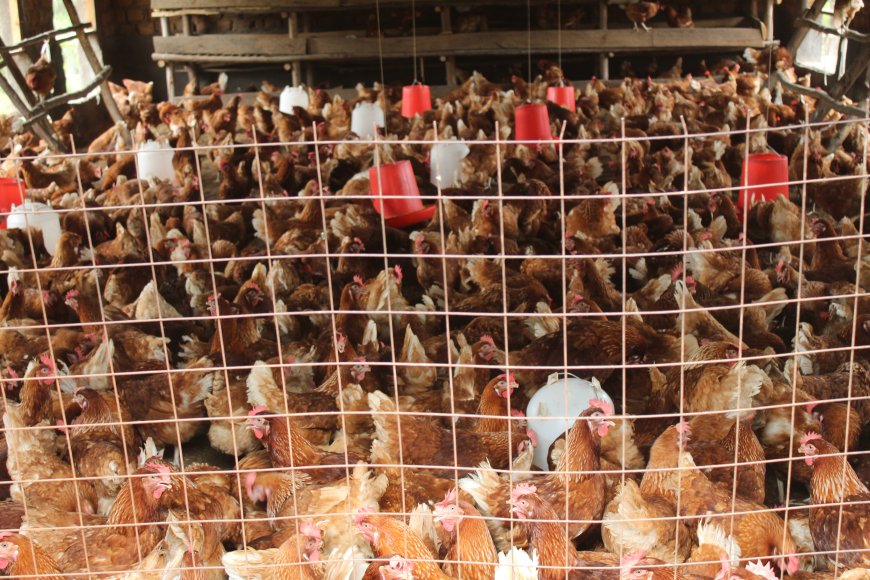
Obutava Community Development Association poultry house at Ambidro village, Alikua Sub-county
In Maracha District, where farmland and land for crops are increasingly fragmented, a group of local farmers have taken up poultry, a climate-smart enterprise that aims to raise incomes and improve household nutrition.
Maracha District poultry farmers under their umbrella association,
Obutava Community Development Initiative, have embarked on
expanding poultry houses and growing feed locally as they prepare for the next batch of layers.
The association, established in February this year, sold 1356 trays
between March and June from 800-layers obtained from Celavie
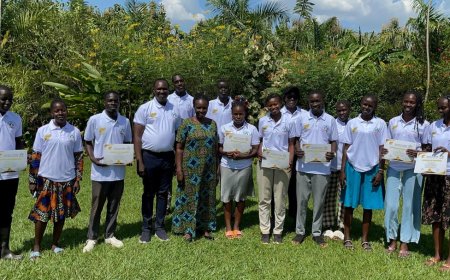
livestock Hub and supported by capacity building from the Climate Smart Jobs project.
The association has 15 members, including seven women and eight men, and plans to bring 1,000 birds in November, having since planted maize as one of the recommended feeds to reduce the cost of production and reliance on externally bought and transported feed.
The group claims that the current poultry house has remained small because many birds died and eggs were destroyed due to congestion in the house, leading to poultry vices like pecking and egg eating.

Obutava Community Development Association, located at Ambidro village, Aroi Parish, Alikua Sub-county in Maracha district, has recorded a positive trend in the business, as well as improved nutrition for the members from the balanced diet that eggs provide.
Primo Adomati, the chairperson of the farmers’ group, said they developed an interest in poultry projects because of the ready market and the challenges of getting land for other agricultural practices, including crop farming.
According to Adomati, land in Maracha District is highly fragmented due to population pressure, which makes it hard to do crop farming.
“From the training we acquired in poultry management, we aim to collect 30-trays and above in the next phase when we procure 1000-birds with reduced cost of production but also there is ready market locally here”
Adomati explained. “We have already planted maize, plans are
underway to have garden cabbage, pumpkin and Dodo as primary feeds for the layers, we already have pawpaw to provide needed nutrients for the birds to have more eggs” Adomati added.
The group members reported improved household nutrition from the poultry products, increased revenue from the sale of eggs, and the capacity built to continue with independent production after the support from Climate Smart Jobs ends.
Alice Amaguru, a member of the association, said she is now raising birds at her home from the knowledge she obtained from the project.
“I feel equipped with knowledge in feed mixing, vaccination and treating the birds that I am applying them with my birds at home,” Amaguru said.
Apart from poultry farming, Amaguru like other farmers, plans to
introduce piggery to diversify her sources of income.
Rose Nzilaru, another member of the farmer group, points to the higher financial returns from poultry farming compared to crop farming, which takes more than three months to mature and where market prices are unpredictable.
“I have been digging to get food majorly, but I realized that keeping chicken is better than growing crops because one can sell the chicken, or its eggs and get money to buy food at home;, Nzilaru said.
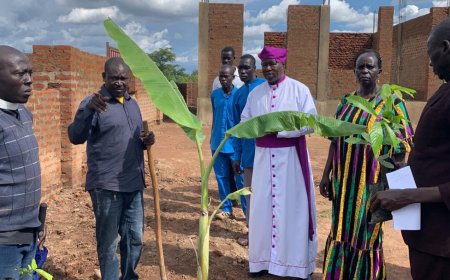
Since Obutava Community Development Initiative picked up the poultry business, communities surrounding the farm located at Obutava Catholic
Church are progressively embracing the enterprise, including the Area Local Council Chairperson, Apollo Dramuke, and Nzere Valley Famer group in neighboring Kijomoro Sub-county.
Karmelo Acidri, the group’s secretary, has since abandoned growing tobacco and established a poultry farm at his home.
Acidri, who is also the catechist at Obutava Catholic Church, has begun to use part of his church messages to mobilize the community to embrace poultry farming.
“I usually encouraged the community to embrace poultry farming during church homily as a way to mobilize people to become wealthy,” Acidri said.
Obutava Community Development Initiative has a long-term plan to build a bigger store to keep farm tools, feeds and poultry products, and to acquire a tricycle to help transport feeds and products to markets in Maracha town, Koboko municipality, and Arua city.
The members of the farmers group also plan to diversify production by venturing into horticulture, which requires only a small quantity of land, using litter and chicken droppings as manure on the farm, as well as Aquaculture since they are situated next to the Enyau river, a permanent water body in the area.
According to a report from the Production Department of Maracha District Local Government, poultry has been selected as one of the enterprises on the basis of land size under programs such as the Parish Development Model.
Abirima Abubakar, the Maracha district Veterinary Officer, said poultry has faster return, involves everyone including children and women, and is a cheaper enterprise for low-income farmers in the district.
“There are many poultry farmer groups under Parish Development
Model, we also have raising individual groups like Nyadri Catholic Town Parish. poultry has boosted people's livelihood” Abirima said. “The
breeding program under MADIFA is also increasing poultry breeding through giving eggs for exotic breeds, the extension staff in the sub counties provide advisory services especially when it comes to disease management and feeding,”Abirima explained.
An estimated 90% of the population in Maracha District derives their livelihood from agriculture, either directly or indirectly.
Residents mainly practice subsistence farming, growing cassava, maize, beans, potatoes, rice, groundnuts, sorghum, while poultry farming is just picking up, with Obutava and Eyotea memorial farms producing chicken products on a small scale.
This story was produced with support from InfoNile and edited by Maddison Erdall, Carbon Carbon science Team Lead at Centigrade
What's Your Reaction?