
















Zombo's Vocational Graduates Encouraged to Prioritize Economic Empowerment Over Premature Marriage

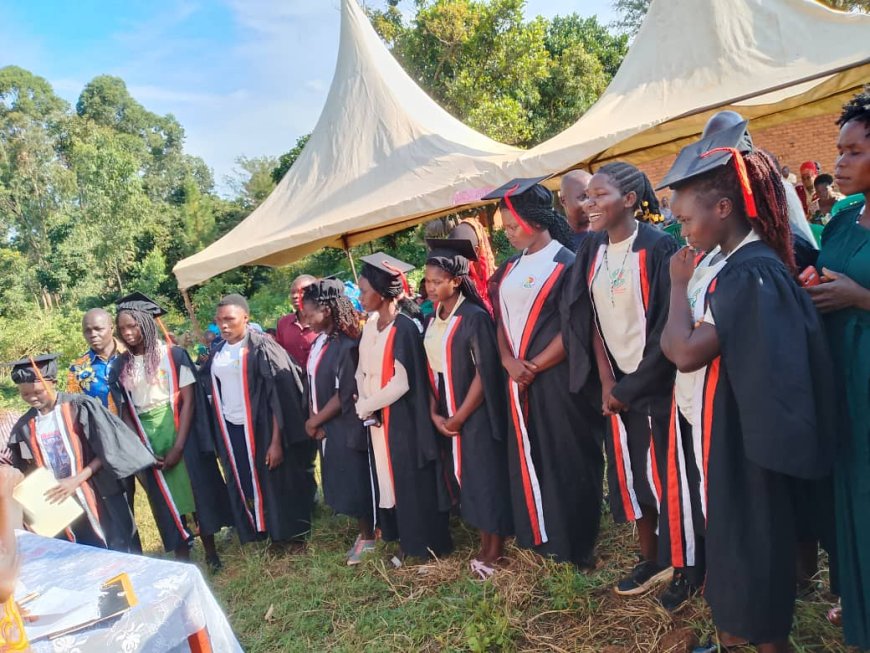
Zombo's Vocational Graduates Encouraged to Prioritize Economic Empowerment Over Premature Marriage
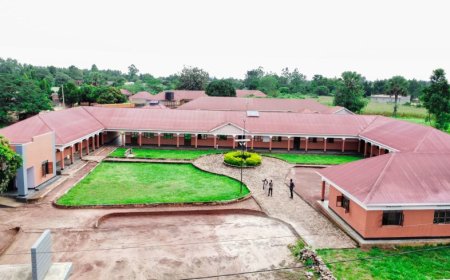
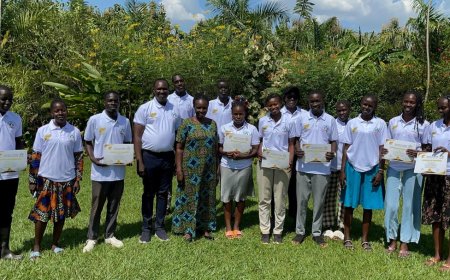
PAIDHA, Zombo District – In a significant stride toward enhancing youth employability and fostering self-reliance, approximately 40 young graduates from diverse parts of Zombo District completed their vocational training at the newly inaugurated Life Concern (LICO) Skilling Center in Paidha Town Council.
The cohort was strongly advised to channel their energies into building sustainable livelihoods through skill application, rather than hastily entering matrimony without financial stability.
The graduation ceremony, held on Friday, November 28, at the LICO Skilling Center in Dwonga Ward, Paidha Town Council, represented a pivotal achievement in the organization's ongoing commitment to equipping adolescents and young adults with market-oriented competencies.
This initiative aligns with broader educational strategies aimed at reducing dropout rates, curbing unemployment, and promoting lifelong learning for economic independence.
The graduates, consisting of 13 males and 27 females aged primarily between 14 and 24 years, underwent a rigorous six-month curriculum featuring hands-on instruction in tailoring and garment cutting, filming and videography, mechanics, hairdressing and cosmetology, woodworks and carpentry, computer literacy, entrepreneurship and life skills, as well as psychological support through co-curricular activities.
This holistic vocational education program emphasizes practical skill acquisition to bridge the gap between formal schooling and workforce readiness.
During the event, Kakura Emmy Kizito, Executive Director of LICO, addressed the unmarried graduates, emphasizing the importance of prioritizing entrepreneurial development and economic autonomy.
"Focus on establishing firm sources of livelihoods to achieve economic independence," he urged, while calling on parents to provide startup kits to support the newly certified learners.
Kakura further advocated for responsible lifestyles, cautioning against distractions such as excessive alcohol consumption or nightlife, and encouraged integration of these skilled individuals into government-led poverty alleviation initiatives like the Parish Development Model (PDM), Emyooga, and Youth Livelihood Program to enhance their socioeconomic mobility.
Brenda Malengrwoth, Project Monitoring and Evaluation Officer, outlined the program's advancements, highlighting the availability of partial bursaries for eligible enrollees.
"The institute will continue extending half bursaries to all students in the 14-24 age bracket," she noted, underscoring LICO's dedication to accessible vocational education and retention strategies for vulnerable youth.
Juliet Amia, Town Agent for Dwonga Ward, reinforced the call for practical application of acquired competencies, advising graduates from shared localities to form cooperative groups to access ongoing governmental enrichment programs, thereby amplifying their entrepreneurial education outcomes.
In Zombo District, with a population surpassing 300,000 (2024 Census) and a 65% youth illiteracy rate per recent surveys, LICO's vocational training serves as a critical intervention, fostering employability, diminishing joblessness, and endowing young learners with practical skills for enduring economic sustainability.
Oscar Pithua, Labour Officer for Zombo District Local Government, praised LICO's efforts, stating, "With today's graduation, the unemployment rate in Zombo has reduced."
He contextualized this within Uganda's national challenge, where over one million youths annually complete their education and enter a saturated job market, exacerbating underemployment.
Bikadhu Patrick Othuma, Assistant Education Officer for Zombo, commended the organization for elevating educational standards by addressing unemployment through targeted skill-building.
"You're supplementing government programs in tackling unemployment," he added, highlighting the role of non-formal education in national development agendas.
Representing the LCV Chairperson, Hassan Ringtho, District Council Speaker, lauded LICO for multifaceted contributions, including human rights advocacy, library establishments to boost knowledge acquisition, and skill provision that creates employment avenues.
"For creating job opportunities for our youths," he said, urging graduates to leverage their training for livelihood transformation.
Ringtho also acknowledged LICO's work in securing land ownership certificates to mitigate conflicts, bridging infrastructure deficiencies, and empowering communities through educational facilities.
Some of the skilled youths, including Trinity Yikparwoth and Blessing Giramia, who acquired hairdressing training, said the knowledge and skills they gained will help transform their livelihoods. They praised the organization for providing them with this life-changing opportunity.
Founded in 2003 as an indigenous non-governmental organization headquartered in Ndaro Village, Dwonga Ward, Paidha Town Council, along Kyambogo University Road, LICO operates with a vision of a just society free from violence and extreme poverty.
Its mission focuses on empowering the poor and vulnerable to contribute to sustainable peace and development, guided by core values such as equity, justice, resilience, stewardship, integrity, professionalism, and accountability.
LICO's programmatic pillars encompass formal and non-formal education to lower dropout rates and youth joblessness; health interventions; livelihood support for widows, orphans, and persons with disabilities; financial inclusion through literacy sessions, linkages to institutions, and startup capital; human rights activities including case registration, mediation, referrals, counseling, and mobile clinics; and mainstreaming HIV/AIDS and gender concerns via awareness campaigns, community outreaches, and psychosocial support.
What's Your Reaction?