









Zombo Holds Budget Conference as CAO Appeals for Improved Staff Attendance, Performance and Timely Procurement


By Mike Rwothomio
Zombo District Chief Administrative Officer (CAO) Robert Abenaitwe has called for practical measures to address staff absenteeism, poor performance, procurement delays, weak contract management, cost overruns and inadequate maintenance of public infrastructure, warning that the challenges undermine effective utilisation of public resources.
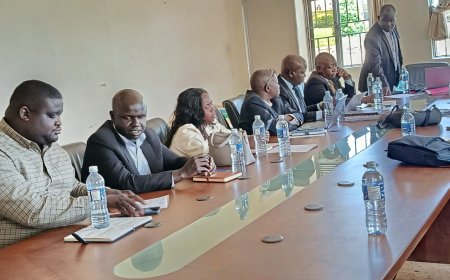
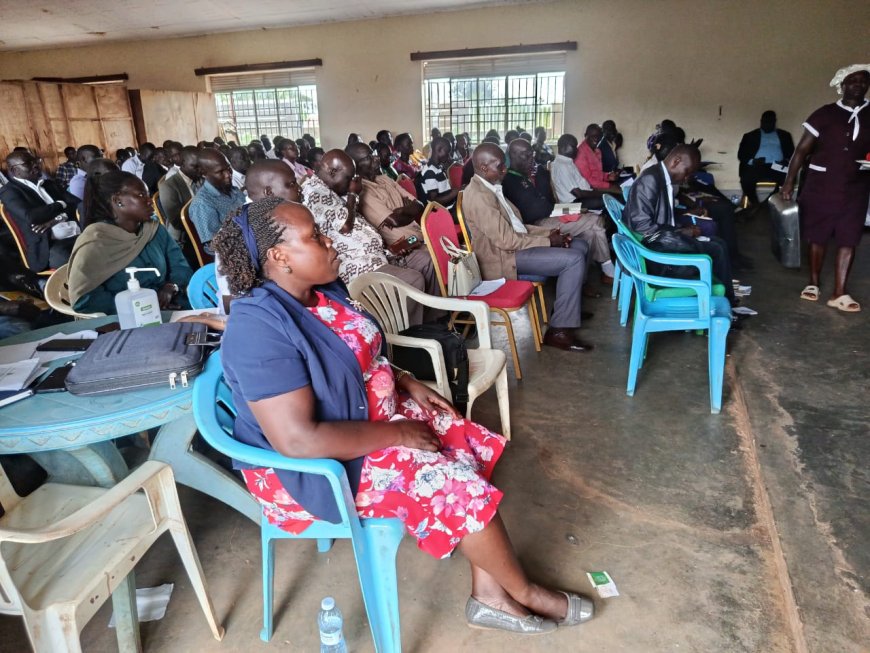
Abenaitwe made the call during the Zombo District Local Government budget conference for the 2027/2028 financial year, held on November 3, 2026, at the district headquarters, where stakeholders reviewed budget performance, service delivery challenges and priorities for the forthcoming financial year.
“While Government continues to expand fiscal space and increase resources to Local Governments, significant challenges remain in translating these resources into quality services for citizens. We need to reflect on the specific issues affecting service delivery, including persistent staff absenteeism, weak performance, and the return of unspent wage resources despite staffing gaps” Abenaitwe noted.
“ we need to reflect on how procurement delays, weak contract management, cost overruns, and inadequate infrastructure maintenance undermine the quality, functionality, and value for money of public investments. I therefore urge you to propose practical and actionable measures to address these challenges and ensure that public resources translate into tangible improvements in services for our people” He added, calling for alignment of district budget priorities with government policies and the strategic direction of the Fourth National Development Plan (NDP IV).
In his keynote address, Abenaitwe urged political leaders, heads of department and other stakeholders to prioritise accountability, efficiency and effective implementation of government programmes to ensure public resources translate into improved service delivery.
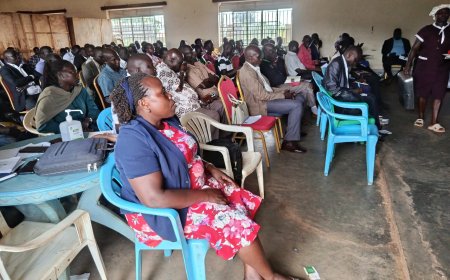
The conference attracted hundreds of participants, including political leaders, heads of department, technical staff, civil society organisations, the media and community representatives.
During the meeting, the district communicated an indicative resource envelope of UGX37,797,595,864 (about UGX37.79 billion) for FY 2027/28, with wage grants taking the largest share of 63.26 per cent.
According to the preliminary resource framework, wage grants will account for UGX23,912,041,940, while non-wage recurrent grants are projected at UGX9,174,874,234, representing 24.27 per cent.
Development grants have been allocated UGX2,993,348,523 (7.92 per cent), while locally raised revenue is projected at UGX1,717,331,167 (4.54 per cent). No external financing is indicated in the preliminary framework.
The figures remain subject to further budget guidance and confirmation.
Abenaitwe said the budget consultations were intended to obtain stakeholders' views on district priorities, identify service delivery challenges and guide preparation of the FY 2027/28 Budget Framework Paper (BFP).
Meanwhile, District Planner Ogwang Louis said the forthcoming budget would focus on deepening implementation of NDP IV, the NRM Manifesto 2026–2031 and the Tenfold Growth Strategy.
Ogwang said government priorities would be channelled through four key growth areas: agro-industrialisation, tourism development, mineral-based industrial development, and science, technology and innovation, including information and communication technology (ICT) and the creative industry.
“The budget for next financial year will aim at deepening implementation Of the Tenfold Growth the Fourth National Development Plan (NDP TV), the NRM Manifesto 2026 — 2031, and the Charter for Fiscal Responsibility” He said, adding that “The strategy is to deepen investment in the ATMS as the principal drivers of tenfold growth. The ATMS are: Agro-industrialization, Tourism Development, Mineral-Based Industrial Development, and Science, Technology and Innovation including ICT and Creative Industry”
He identified increasing agricultural production and productivity, strengthening agricultural extension services, promoting value addition and improving market access as some of the district's key planning priorities.
On the Parish Development Model (PDM), Ogwang said government would continue supporting enterprise sustainability, beneficiary productivity, loan recovery, value-chain development and market access, alongside strengthening governance of PDM Enterprise Groups and SACCOs.
He further outlined budget execution guidelines requiring accounting officers to avoid unfunded commitments, prevent accumulation of domestic arrears, recruit only within approved wage provisions and ensure projects meet the required readiness standards before receiving implementation funding.
The district planner also emphasised the need to integrate cross-cutting issues, including gender and equity, the needs of women, children, older persons and persons with disabilities, health and epidemics, climate change, environmental protection and natural resource management into the budget process.
Zombo District has a total population of 312,621 people, comprising 146,719 males (46.9 per cent) and 165,902 females (53.1 per cent).
The district has a household population of 311,245 across 71,491 households, with an average household size of 4.4 persons. Between 2014 and 2024, the district registered an annual population growth rate of 2.8 per cent.
At county level, Okoro has a population of 173,278, comprising 80,704 males and 92,574 females, while Ora County has 139,343 residents.
During the consultative session, heads of department presented their respective departmental priorities and responded to questions from members of the public, providing a platform for budget scrutiny and stakeholder participation.
Athuma Sub-county LCIII Chairperson Genario Unegiu and his Warr Sub-county counterpart, James Cekecan Apoi, raised concerns over what they described as unequal distribution of resources, calling for adjustments where necessary.
In response, LCV Chairperson James Oruna Oyullu assured stakeholders that all lower local governments would be catered for, although he acknowledged persistent challenges arising from the limited resource envelope.
Assistant Resident District Commissioner (RDC) Bruno Mananu called for teamwork between technical staff, political leaders and communities in the execution of government programmes, emphasising the need for clear roles and responsibilities.
The conference was held under the theme, “Full Monetisation of Uganda's Economy through Commercial Agriculture, Industrialisation, Expanding and Broadening Services, Digital Transformation and Market Access,” in line with the Public Finance Management Act, 2015, and the Local Governments Act, Cap 243.
Under Section 9(2) of the Public Finance Management Act, 2015, accounting officers are required to prepare and submit Local Government Budget Framework Papers to the Ministry of Finance, Planning and Economic Development by November 15 each year.
All votes are required to prepare and submit their Budget Framework Papers by November 13, 2026, for review and consolidation before onward submission to Parliament by the Minister of Finance, Planning and Economic Development.
What's Your Reaction?