














KARENGA NEWS TODAY: Deputy RDC Calls for Collective Action to End Teenage Pregnancies and Child Marriage


Karenga District, Uganda – The Deputy Resident District Commissioner (RDC) of Karenga District, Ronald Kedi Ongodia, has commended Reproductive Health Uganda (RHU) for mobilizing communities to openly discuss the growing challenges of teenage pregnancies and child marriage in the district.
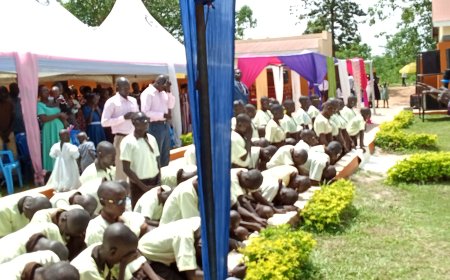
Speaking as the Chief Guest during a Community Baraza organized by RHU, Ongodia on the 11th June 2026, DRDC Ongodia appreciated the organization's efforts in creating platforms that enable community members to address critical child protection issues affecting the district.
He urged participants not only to discuss challenges facing children but also to actively participate in implementing practical solutions that promote child rights and reduce the alarming cases of teenage pregnancies and child marriages in their communities.
“We must move beyond discussions and work together to implement good practices that protect our children and secure their future,” Ongodia emphasized.
The Deputy RDC attributed the increasing cases of child marriage and teenage pregnancies to several societal challenges, including poor parenting, child neglect, poverty, and the failure by community members to report offenders.
He called upon residents to become change agents by promoting positive values, protecting vulnerable children, and setting good examples for younger generations.
Ongodia stressed the importance of parental responsibility, noting that parents and guardians must closely monitor their children and be aware of their whereabouts, especially during evening hours when children are exposed to various risks.
He further encouraged community members to promptly report all cases of child abuse, emphasizing that government institutions can only act on cases that are formally reported.
“Timely reporting of cases such as defilement, rape, child neglect, and child marriage is essential for effective intervention and justice for victims,” he said.
Family Planning and Child Protection
Addressing family welfare issues, Ongodia advised parents who face difficulties in adequately providing for and supervising large families to embrace family planning methods.
He strongly condemned the practice of giving alcohol to children, describing it as harmful to their physical health, mental development, and decision-making abilities.
The Deputy RDC also called upon community members to become ambassadors of child protection awareness campaigns and urged residents to report illegal discos and other activities that expose children to abuse, exploitation, and risky behaviours.
To strengthen future interventions, he recommended involving all Local Council I Chairpersons, Community Development Officers (CDOs), Parish Chiefs, religious leaders, and school administrators in future Barazas and community sensitization programs.
He further emphasized the need for proper documentation and reporting of cases related to defilement, rape, child abuse, and child neglect to facilitate timely action by relevant authorities.
Additionally, Ongodia cautioned residents against excessive alcohol consumption, observing that alcohol abuse has contributed to increased domestic violence, poor health outcomes, loss of productivity, and preventable deaths within communities.
Community Members Highlight Challenges Facing Children
During the discussions, participants defined a child as any person between the ages of 0 and 17 years in accordance with national and international child protection frameworks.
Community members reflected on the increasing number of children being married off at an early age and the growing number of school dropouts within their communities. Participants acknowledged that these trends demonstrate the urgency of collective action to safeguard children's rights.
Several challenges affecting children and contributing to teenage pregnancies and child marriage were identified. These included denial of access to education, school dropout, poverty, child neglect, teenage pregnancies, child marriage, defilement, and sexual abuse.
Participants noted that teenage pregnancies and child marriages continue to deprive children of their rights to education, health services, protection, and personal development.
Peer pressure and negative influence from social groups were also identified as significant contributors to risky behaviours among adolescents. Participants further expressed concern over the growing influence of media and social media, which often expose children to inappropriate content without adequate parental guidance.
Poor parenting and inadequate parental care emerged as key concerns. Community members observed that some parents fail to provide the necessary support, supervision, and guidance required during children's growth and development.
Cases of child labour and exploitation were also reported, with some children being forced into income-generating activities at the expense of their education and wellbeing.
Participants further highlighted unrestricted leisure activities such as discos and night entertainment events as environments that expose children to substance abuse, sexual exploitation, and other harmful behaviours.
Causes of Teenage Pregnancies
The Baraza identified several underlying causes of teenage pregnancies within the community.
Poverty was highlighted as a major contributing factor, as many vulnerable families struggle to meet basic needs, making children susceptible to exploitation and transactional relationships.
Child labour was also cited as a risk factor because children engaged in work often interact with adults who may take advantage of them.
Participants further identified limited access to guidance and counselling services as a significant challenge, noting that many adolescents lack accurate information on reproductive health, life skills, and personal development.
Other contributing factors included orphanhood, child-headed households, child neglect, and inadequate parental supervision, all of which increase children's vulnerability to abuse and exploitation.
Alcoholism was also highlighted as a major driver of teenage pregnancies. Participants observed that excessive alcohol consumption affects both parents and young people by impairing judgment, weakening parental responsibility, and increasing engagement in risky sexual behaviours.
Resolutions and Action Points
At the conclusion of the discussions, participants agreed on several resolutions aimed at addressing teenage pregnancies and child marriage.
Among the key resolutions was the need to strengthen enforcement of laws requiring parents and guardians to ensure that all school-age children attend school. Community members proposed that parents who deliberately fail to take their children to school should be held accountable.
Participants also resolved to support the arrest and prosecution of perpetrators involved in defilement, child marriage, and other forms of violence against children. Parents and guardians who facilitate or condone child marriages should equally face legal consequences.
The community further agreed to limit unnecessary leisure activities, including illegal discos and night events, that expose children to harmful influences.
Additional action points included:
* Strengthening community awareness and sensitization programmes.
* Reinforcing enforcement of child protection laws.
* Developing community-level strategies to combat gender-based violence.
* Identifying and addressing factors that lead children into early marriage.
* Promoting school retention and completion among girls and boys.
* Enhancing collaboration between local leaders, schools, parents, law enforcement agencies, and development partners.
Dialogue and Open Discussions
The primary methodology employed during the Baraza was participatory community dialogue. Community members were given an opportunity to openly discuss issues affecting children and adolescents and propose practical solutions.
Through guided discussions, participants shared experiences regarding school dropout, child neglect, poverty, alcoholism, peer influence, and other factors contributing to child marriage and teenage pregnancies.
The interactive nature of the discussions encouraged ownership of identified challenges and strengthened collective responsibility among stakeholders.
Awareness and Sensitization Sessions
The Baraza also utilized awareness creation and sensitization sessions to educate participants on the causes, consequences, and legal implications of child marriage and teenage pregnancies.
Technical officers, local government leaders, and security personnel provided information on child rights, parental responsibilities, gender-based violence, and laws protecting children.
Participants were sensitized on the long-term consequences of teenage pregnancies, including health risks, interrupted education, increased poverty, social stigma, and limited economic opportunities for young mothers.
The sessions strengthened community understanding of child protection issues and reinforced commitment among stakeholders to prevent violations against children and promote a safer environment for their growth and development.
Key leaders in Karenga such as District Chairperson, District Internal Security Organization among other attended the event.
What's Your Reaction?