














How Omia Agribusiness is Transforming Watermelon Farming for Young Women in Yumbe

How Omia Agribusiness is Transforming Watermelon Farming for Young Women in Yumbe

Robert Mone
18/08/2026
Yumbe District
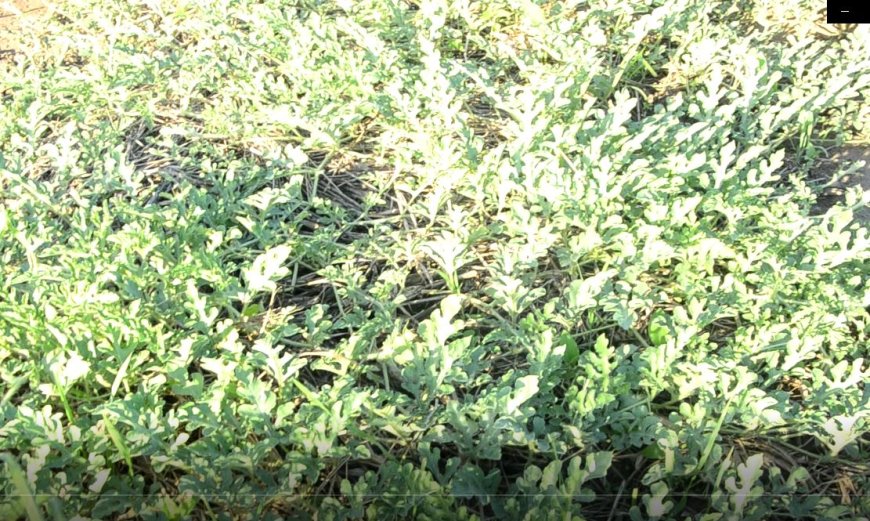
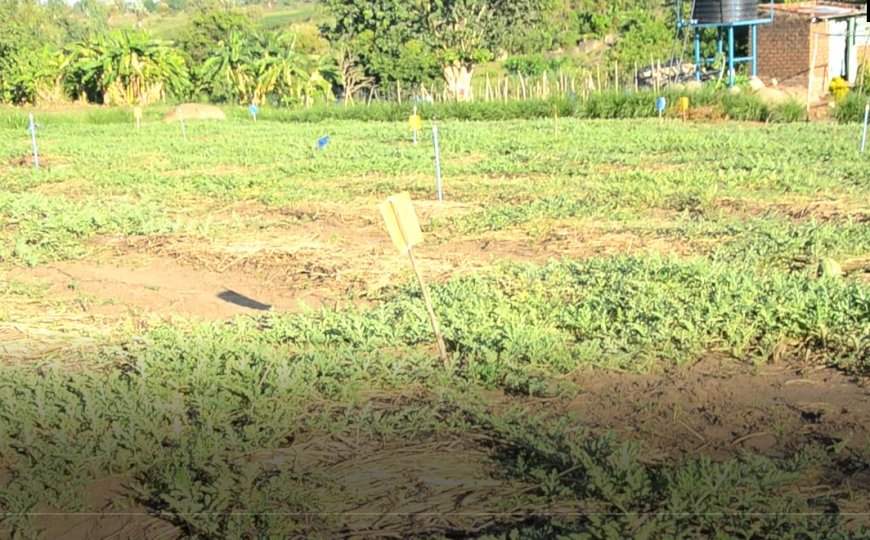
Section of watermelon gardern at Omaruku Young women and Savings Farmers Group farm in Lodonga Sub-County
For the young women of the Omaruku Young Women and Savings Farmers Group in Lodonga Sub-County, Yumbe district, watermelon farming was once a distant dream.
Bad roads, unreliable transport, and limited market access made it almost impossible to turn their agricultural efforts into reliable income but this is now changing.
The group, consisting of 30 women aged between 20 and 45, including single mothers and heads of household, is based in Invetre Village, Orogbo Parish, more than 80 kilometers from Arua City, where markets are most reliable.
For years, the distance and poor road conditions connecting their village to the Yumbe-Koboko Highway made transporting farm
produce costly, risky, and exhausting.
Then Omia Agribusiness arrived, a Lifeline Through the Climate Smart Jobs Project.
Through the Climate Smart Jobs project partnership, Omia Agribusiness has stepped in to close the gap between production and market.
It provided the Omaruku group with solar-powered irrigation equipment, quality watermelon seeds, organic fertiliser, and organic pesticides.
Omia also delivered practical training on seed selection, field preparation, planting, pest control, postharvest handling, and marketing.
The support did not stop at farming, Omia Agribusiness went a step further by providing sanitary materials, including pads and laundry soap, to mothers of childbearing age in the group.
This was after recognising that the well-being of women farmers goes beyond the farm gate.
From a Quarter Acre to Growing Ambition, the results are already visible. Molly Baradu, a group member, says that since Omia
Agribusiness came on board in September last year, the group cleared a quarter acre of land and planted watermelon.
They earned 2.6 million Uganda shillings from their first harvest. “Much as some of our watermelons got spoiled from a disease outbreak, we were still able to harvest and sell at more than 10,000 shillings each” Baradu said.
“The training we received is now helping members grow watermelon at their homesteads, and we are also supporting farmers in neighbouring villages of Kititibu, Padaru, and Kibela who have shown interest in joining us” Badaru added
The proceeds from sales have been channelled back into the groups Village Savings scheme, where members can borrow at low interest rates. This is enabling them to turn farm income into a growing financial safety net for the entire group.
The group now has plans to expand to a full acre, adding tomatoes alongside watermelon in the next planting season.
The Challenges Ahead
Zumura Bako, one of the farmers, says expanding production requires longer irrigation pipes and walk-behind tractors to reduce the time and labour spent on land preparation.
“We are currently using our hands to dig the garden, which is quite tedious for one acre” Bako said. “If possible, the government should support us with longer pipes for water and wheeled tractors to reduce the time spent on garden preparation so we are ready for planting on time” Bako narrated.
Alima, the group’s chairperson, who has spearheaded the movement by establishing her own home watermelon patch, believes true community resilience starts at the household level. She explained that transforming smallholder operations into commercial successes hinges on expanding individual production while securing key agricultural inputs.
“If we are supported with seeds, pesticides, fertilisers, and modern farm equipment like tractors and tricycles for transportation, this group can become fully self-sustaining” Alima said.
To turn this vision into reality, the leadership is taking a direct approach by ensuring every member actively participates in production.
“I have already tasked individual members to establish their own watermelon gardens to increase production and ensure every household has an income base” Alima added.
Alima is also encouraging surrounding communities to shift from growing tobacco, a crop with low returns and a long maturation period, to watermelon farming, which he says offers faster yields and a growing local market.
Why Yumbe Is Perfect for Watermelon
Onzima Abdullahi, an agricultural officer attached to Odravu Sub- County, confirms that Yumbe’s climate and soil conditions are ideal for watermelon production.
“The temperature in Yumbe ranges between 22 and 28 degrees Celsius, which is perfectly suited for watermelon,” he explained.
“The soil is light, well-drained, and rich in organic matter with high levels of nitrogen, potassium, manganese, and calcium, all of which watermelon thrives on” Abdullahi said
Under these conditions, a single quarter-acre plot can produce up to 2,600 watermelon fruits in one season, this can translate to approximately 6 million Uganda shillings in earnings per quarter
acre.
Onzima notes that watermelon production in Yumbe has grown significantly over the past decade.
Today, more than 200 farmers across the district are growing watermelon on a small scale, with many now moving toward medium and large-scale production, driven by growing local demand and improved extension services.
A Fruit Whose Value Goes Beyond the Farm Watermelon is more than a cash crop. Composed of over 90 percent water, it is one of the most hydrating fruits available, particularly valuable in the hot climate of northern Uganda.
It is eaten fresh, blended into juices and smoothies, used in cooking, and increasingly incorporated into beverages such as watermelon lemonade and kombucha.
Rich in lycopene, vitamin C, beta-carotene, potassium, and magnesium, watermelon supports heart health, hydration, and immune function.
Even its seeds and rinds carry nutritional value, which makes it a crop with minimal waste and multiple uses.
For communities in Yumbe and across the West Nile region, watermelon is becoming not just a source of income but a source of nutrition, hydration, and economic independence, particularly
What's Your Reaction?